
For roughly half of South Korean travelers, the next trip abroad will be a short one.
According to the data from Asia Outbound Traveler Profiles 2026: Northeast Asia Edition, powered by Outbox’s Asia Travel Sentiment (ATS) platform, 49% of South Korean travelers plan to take an international trip lasting fewer than five nights within the next six months.
Three decisions shape these trips: where to go, how much to spend and where to stay. The ATS data on each points in the same direction. The trips are short, but expectations for them are not.
A shortlist of nearby destinations
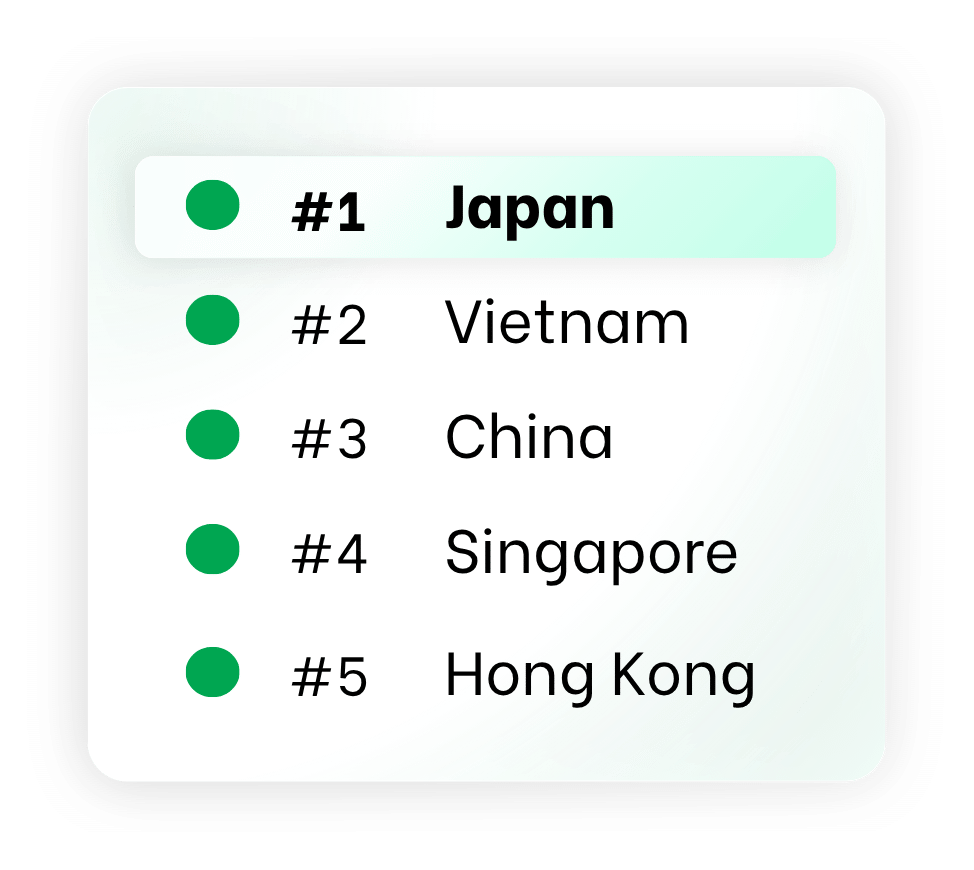
Japan is the preferred destination for short getaways among South Korean travelers, followed by Vietnam, China, Singapore and Hong Kong. All five are a short- to medium-haul flight from Korea, which matters on a trip of three or four nights, where every hour in transit is an hour less at the destination. Within that shared advantage, the five offer quite different things, from a large country with deep cultural appeal to compact cities that are easy to cover in a few days.
With travel time a shared strength, competition moves to ease. A destination wins a short trip by being simple to plan and quick to enjoy: straightforward access, a good choice of hotels and experiences that deliver within the first day or two. Awareness earns a place on the shortlist; convenience wins the booking.
A short stay, a serious budget
A shorter trip does not necessarily translate into lower travel spending. Among travelers planning international trips of fewer than five nights, 46% expect to spend between US$1,000 and US$2,000. This suggests that short-stay travelers can represent a considerable spending opportunity, particularly as their limited time away makes convenience, accessibility and well-curated experiences more valuable.
For restaurants, attractions, retailers and other tourism businesses, the opportunity lies in capturing a greater share of this spending within a relatively short travel window. Making experiences easy to discover, book and access can help businesses convert travelers’ spending intentions into actual purchases. Advance reservations, seamless booking options and packages tailored to three- or four-night itineraries are practical ways to reach travelers who want to make the most of their time at a destination.
Fewer nights, a better stay
Around one in three short-trip travelers (34%) prefer 4–5 star hotel chains, highlighting the importance of accommodation quality in shaping the short-trip experience. With fewer nights at a destination, travelers may be more selective about where they stay, placing greater emphasis on comfort, service and convenience throughout their visit.
Hotel offerings can reflect these different priorities. Travelers seeking relaxation may be drawn to packages that pair quality accommodation with spa treatments or curated dining experiences, while those with tightly scheduled itineraries may prioritize central locations, convenient transport connections and flexible check-in and check-out arrangements. By developing offers around distinct travel needs, hotels can strengthen their appeal to short-trip guests and make their properties a more compelling part of the overall destination experience.
What this means for the industry
Short getaways ask the same thing of every part of the industry: deliver a complete experience in a small window.
- Destination marketing organizations: promote ready-made short itineraries and make ease of access part of the pitch, alongside the list of things to see.
- Hotels: sell the stay, not the night. Packages built around rest, dining or location suit a guest with a few days and a meaningful budget.
- Airlines and travel businesses: build offers around the five leading short-trip destinations, with flight times that leave as much of a three- or four-night trip as possible at the destination, and package flights, hotels and activities so the trip is easy to book.
A segment in its own right
Short getaways bring the idea of the microvacation to South Korea’s outbound market: a few nights, a nearby destination, a meaningful budget and a preference for quality hotels. With close to half of travelers planning one, the destinations and businesses that understand how these trips come together will be the ones chosen when travelers only have a few days to spare.
Want to go deeper into this segment? Get in touch to explore more data on South Korean travelers and what it means for your destination, hotel or airline.