Ho Chi Minh City (HCMC) has entered a defining moment in its tourism trajectory. As Vietnam’s largest metropolis and a fast-rising regional hub, the city has set ambitious goals for 2025 — welcoming 10 million international visitors and expanding its tourism economy through diversified products, new spatial development, and an increasingly global brand. To reach these goals, understanding how travelers perceive HCMC has become just as important as how many actually arrive.
The HCMC Global Traveler Barometer (HCMC GTB) represents a major advancement in this effort. Developed by the Ho Chi Minh City Tourism Promotion Center in partnership with The Outbox Company, the HCMC GTB provides a standardized, twice-yearly assessment of traveler intention, behavior, and perception regarding HCMC across 13 key international markets.
This article focuses on one of the most important components of the study: how international markets perceive Ho Chi Minh City as a destination. The insights below highlight areas of strong brand presence, differences across markets and opportunities for more targeted branding and marketing strategies.
1. Awareness Patterns: Strong Regional Visibility with Clear Market Variations
The HCMC Global Traveler Barometer shows clear differences in how Ho Chi Minh City is recognized and considered across international markets. Southeast Asia and Australia record the highest awareness levels, both averaging 3.5 on a five-point scale, followed by South Korea at 3.2. In these markets, Ho Chi Minh City consistently appears among the better-known urban destinations in the region, alongside Singapore, Bangkok, and Kuala Lumpur.
In markets where awareness is strongest, consideration levels are also relatively high. Southeast Asia records the highest consideration score at 3.3, with Australia at 3.0, indicating that familiarity with the destination is reflected in early-stage travel evaluation. These markets continue to represent a stable base where Ho Chi Minh City is not only known, but regularly included in destination shortlists.
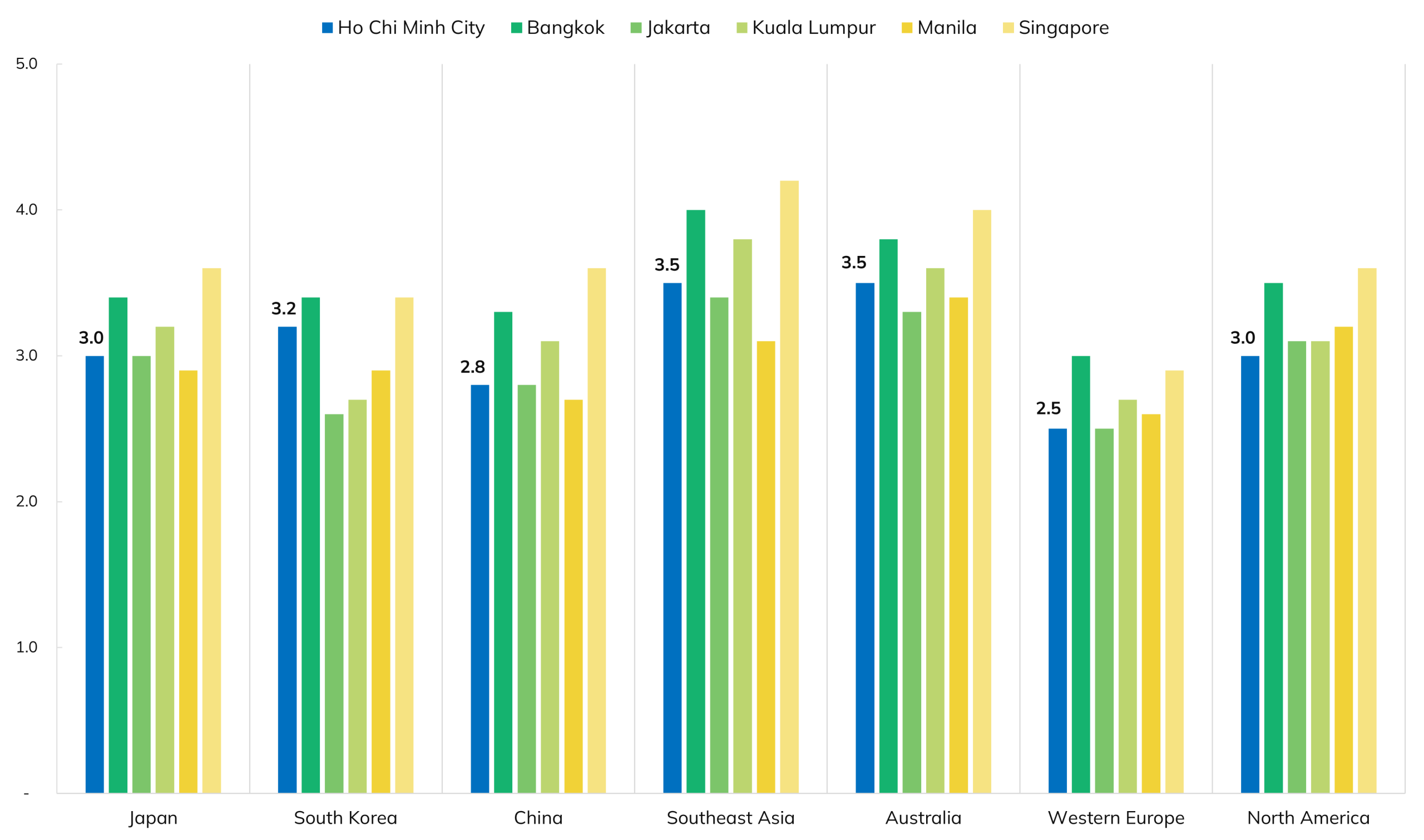
In contrast, Japan, China, North America, and Western Europe show lower and less consistent levels of recognition. In these markets, major Asian cities such as Singapore and Bangkok continue to dominate top-of-mind awareness, reflecting differences in long-term exposure and brand visibility across these markets.
2. How International Travelers Understand HCMC’s Core Offerings
According to the study, travelers’ perceptions of the city’s three main tourism pillars — cuisine, landscape, and experiences — are generally aligned, with average familiarity levels ranging from 2.9 to 3.0 on a five-point scale. This consistency indicates that international audiences have a stable baseline understanding of what HCMC offers, even if the depth of that understanding varies across markets.
Among the three pillars, landscape demonstrates slightly stronger familiarity overall. Even in long-haul regions such as North America and Western Europe, respondents report a clearer sense of the city’s urban character compared with other attributes. However, a notable proportion of travelers still express neutrality or uncertainty regarding HCMC’s landscape, indicating that the city’s visual and spatial identity has yet to crystallize into a clearly defined global image. This gap presents an opportunity to articulate a more compelling and coherent urban narrative in future campaigns.
Meanwhile, the tourism experience pillar shows more variation across markets. Southeast Asia, South Korea, and Australia report higher familiarity, with over 40 percent of travelers in these regions recognizing or understanding the types of experiences available in HCMC. In contrast, Western Europe and North America show higher levels of limited familiarity, reflecting a need for more visibility at the experiential level — from nightlife and cultural activities to riverfront attractions and guided city exploration.
3. What These Patterns Say About HCMC’s Destination Image
Findings from the HCMC Global Traveler Barometer 2025 establish a strong and positive international perception of Ho Chi Minh City. The city is widely recognized not for single iconic landmarks, but as an interesting, culturally rich urban destination defined by its diverse, experiential attributes.
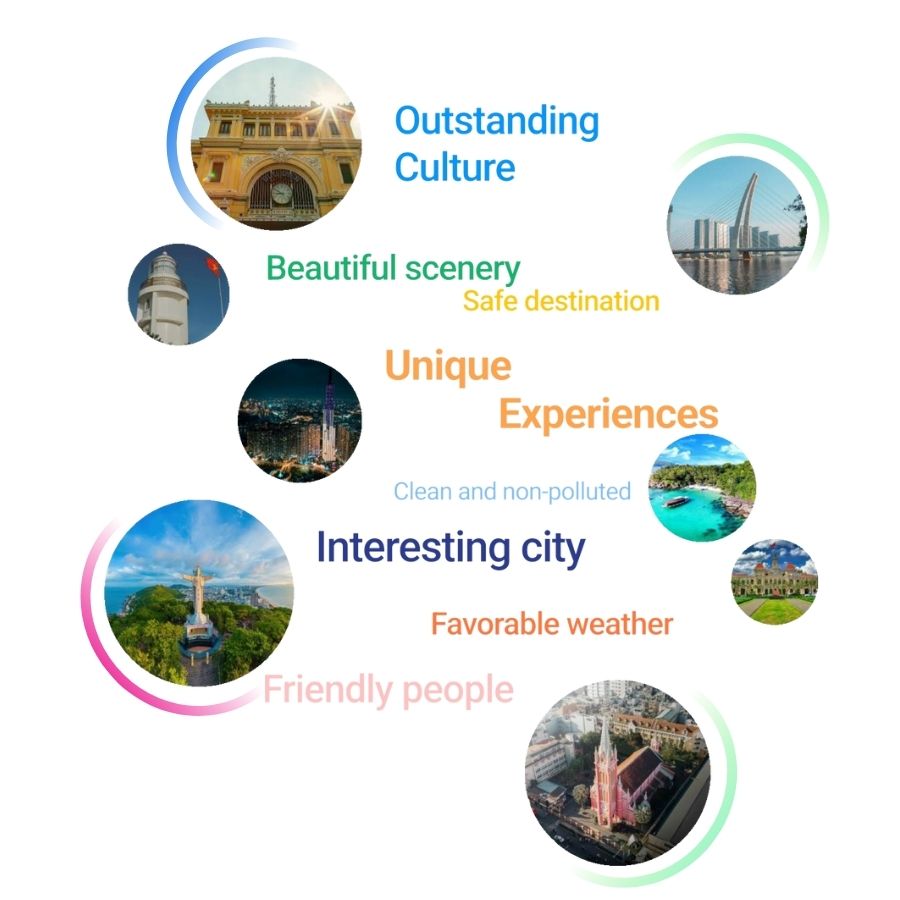
Travelers across markets consistently describe HCMC using positive, experience-led terms such as outstanding culture, unique experiences, beautiful scenery, and friendly people. This recurring sentiment confirms that HCMC’s image is rooted in its authentic atmosphere, rich human interaction, and the energy of its everyday urban life. Furthermore, attributes like safety, favorable weather, and cleanliness reinforce a sense of accessibility, broadening the city’s appeal across diverse traveler segments.
Overall, the city’s destination image is robust, anchored by positive sentiment and strong experiential appeal. Future communication efforts should capitalize on this existing equity by refining and organizing these established, positive associations. This optimization will ensure the city’s distinctive identity is clearly and consistently articulated to the global audience.
Managing Destination Brands Through Continuous Traveler Insight
The HCMC Global Traveler Barometer illustrates how destination brand image can be tracked in a structured and comparable way across international markets. By monitoring awareness, consideration, and the associations travelers use to describe Ho Chi Minh City, this solution gives tourism stakeholders a clearer view of how the city is positioned today and how its perception shifts over time, supporting more precise branding, messaging, and market prioritization decisions.
For destinations looking to better understand how this solution can support your destination’s tourism strategy, contact us to learn more.