
1. Project Overview
As destinations increasingly embrace data-driven tourism management, Tourism Intelligence Systems (TIS) have become a critical enabler of smarter planning, more effective governance, and sustainable destination development. By integrating tourism data into a centralized platform, TIS provides destination managers with timely insights to monitor performance, identify trends, and make evidence-based decisions.
While destination intelligence is gaining momentum globally, many destinations in Vietnam and Southeast Asia are still in the early stages of digital transformation. Tourism data is often collected through fragmented reporting processes, limiting the ability of tourism authorities to generate consistent, timely, and actionable insights.
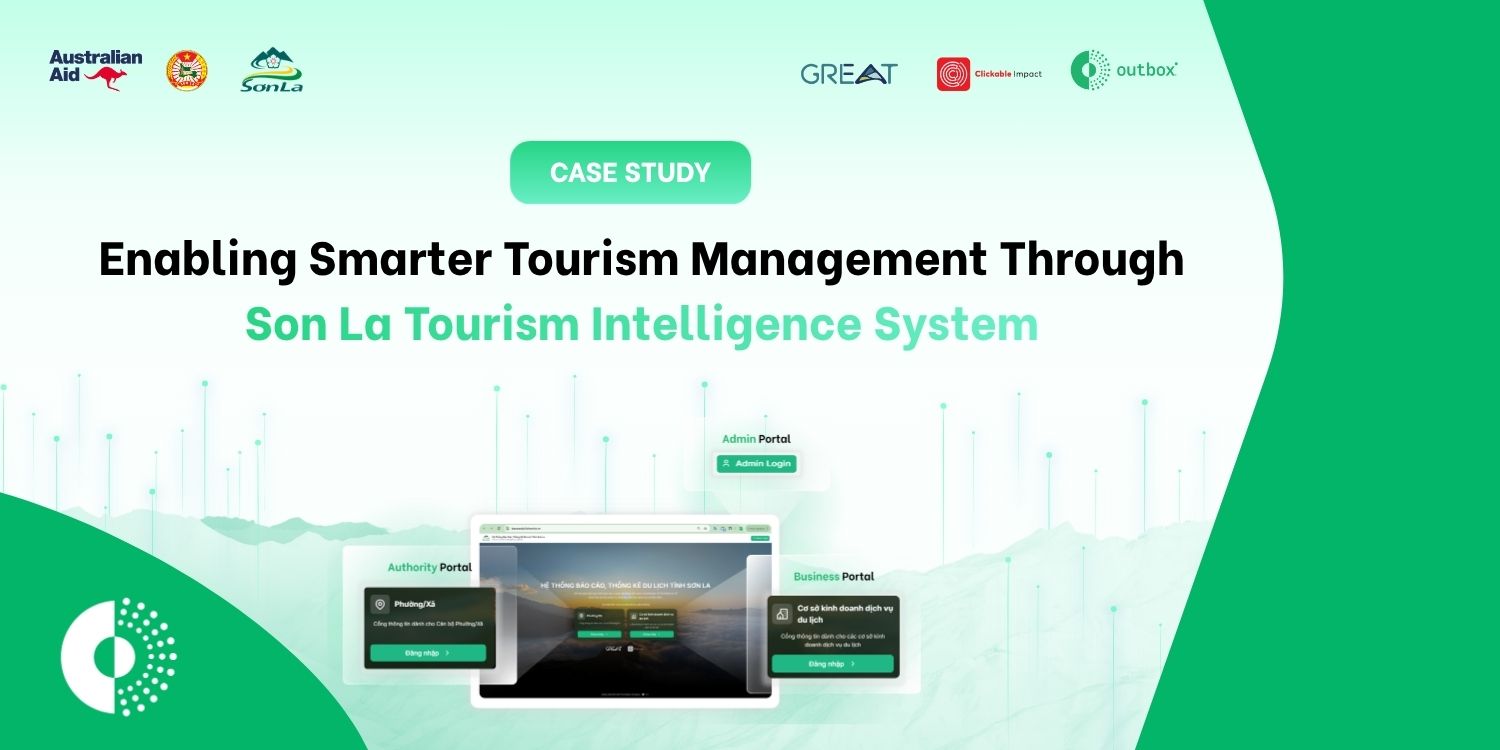
To support Sơn La Province’s digital transformation journey, The Outbox Company collaborated with Clickable Impact to develop the first phase of the Sơn La Tourism Intelligence System (TIS). This project was delivered by The Outbox Company in collaboration with Clickable Impact under the Gender-Responsive Equitable Agriculture and Tourism (GREAT) Phase 2 Program, funded by the Australian Government. The first phase focused on establishing a standardized digital reporting ecosystem, creating the essential infrastructure needed to support future destination intelligence capabilities.
2. The Challenge
Destination management begins with data—but for many emerging destinations, obtaining reliable tourism data remains one of the biggest obstacles. Before the Sơn La Tourism Intelligence System (TIS), tourism reporting relied on fragmented processes that limited the availability of timely, standardized, and actionable insights.
The key challenges included:
Fragmented and Manual Reporting
Tourism statistics were collected through disconnected reporting workflows involving tourism businesses, commune-level authorities, and the provincial Department of Culture, Sports and Tourism. Data consolidation was largely manual, resulting in:
- Time-consuming reporting and validation processes.
- Inconsistent reporting formats across stakeholders.
- Limited visibility into tourism performance at different administrative levels.
- Delayed access to tourism statistics for planning and decision-making.
Limited Digital Readiness
The challenge extended beyond reporting workflows. Most tourism businesses in Sơn La are small and medium-sized enterprises (SMEs) with varying levels of digital maturity. Many still relied on manual record-keeping, while digital reporting systems and business intelligence tools remained largely inaccessible.
As a result, any new solution needed to be:
- Intuitive and easy to navigate.
- Accessible for users with different levels of digital literacy.
- Flexible enough to support both web-based data entry and Excel uploads.
- Designed to minimize the learning curve for first-time users.
Reporting Without Clear Value for Businesses
For many tourism businesses in Sơn La, reporting was primarily seen as a one-way administrative requirement rather than a meaningful digital tool.
While businesses regularly submitted operational data to comply with reporting obligations, they had limited visibility into how this information was used or how it could benefit their own operations. As a result, participation in reporting processes was often driven by compliance rather than engagement.
In addition, most small and medium-sized tourism enterprises had limited access to digital management tools or business intelligence systems. Without dashboards, historical performance tracking, or comparative insights, businesses had little ability to understand their own operational trends or position within the broader tourism landscape.
This created a key challenge for system design: how to transform reporting from a one-way administrative process into a two-way value exchange, where businesses not only submit data but also gain actionable insights in return.
A Need for a Stronger Data Foundation
To build a modern Tourism Intelligence System, Sơn La first needed to establish a reliable and standardized data ecosystem. This meant creating a digital platform that could:
- Standardize tourism data collection across the province.
- Connect tourism businesses, commune-level authorities, and provincial administrators through a unified reporting workflow.
- Improve data quality and reporting transparency.
- Deliver meaningful insights for both public authorities and tourism businesses through interactive dashboards.
3. Our Approach
Rather than developing a standalone reporting platform, we designed the first phase of the Sơn La Tourism Intelligence System (TIS) as an integrated digital ecosystem that connects tourism businesses, commune-level authorities, and the Department of Culture, Sports and Tourism through a single, standardized reporting workflow.
The platform was designed with one guiding principle: every user should have a system tailored to their responsibilities while contributing to a shared source of truth for tourism data. Instead of requiring different stakeholders to navigate the same interface, each portal is purpose-built around the daily workflows, information needs, and reporting responsibilities of its users.
A User-Centric Platform for Every Stakeholder
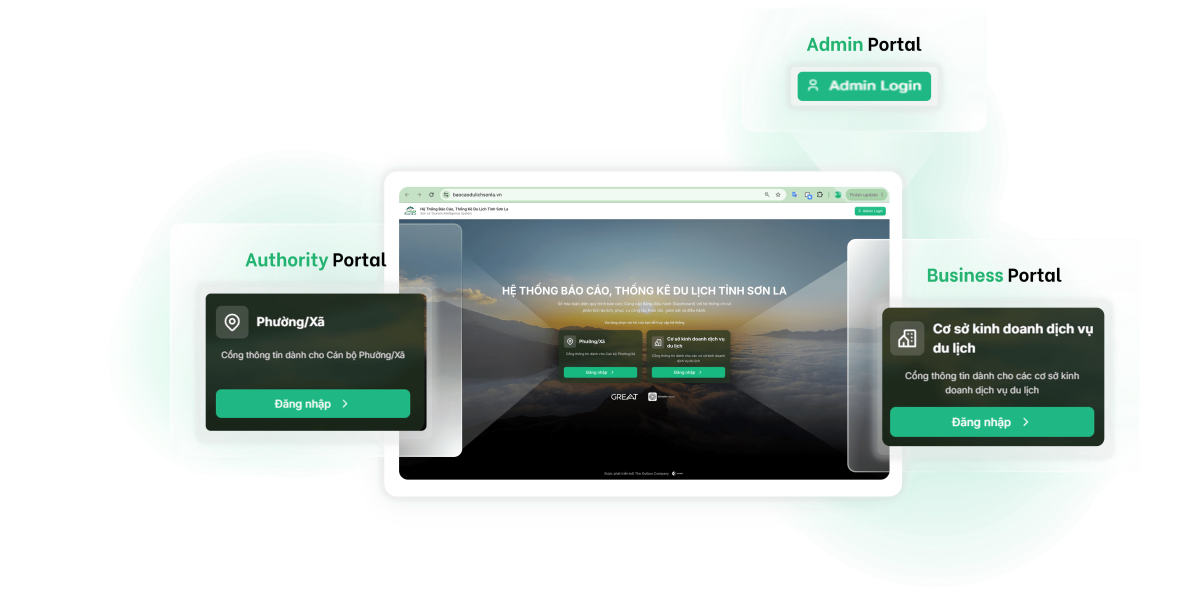
Designed specifically for tourism businesses, the Business Portal simplifies the process of submitting operational data while returning immediate value to users.
The Business Portal empowers tourism businesses to complete reporting efficiently while gaining valuable insights into their own performance.
Key capabilities include:
- Submit standardized operational reports directly to commune-level authorities through guided digital forms.
- Choose between web-based data entry or Excel template uploads for greater flexibility.
- Receive automated notifications and reporting reminders to support timely submissions.
- Monitor business performance through interactive dashboards with historical trend analysis.
- Compare business performance against high-level tourism trends across Sơn La Province.
- Automated in-app notifications keep businesses informed throughout each reporting cycle, reminding them when reports are due and when action is required.
The Authority Portal enables commune-level authorities to manage tourism reporting within their jurisdictions through a centralized workspace.
Key capabilities include:
- Monitor reporting progress across all businesses under their management.
- Review, validate, approve, or return reports through an integrated approval workflow.
- Guided reporting workflows with step-by-step data entry.
- Flexible reporting options through web forms or Excel upload.
- Built-in validation to improve data quality before submission.
- Share supporting documents and official notices through built-in document upload functionality, enabling more efficient communication without relying on fragmented email or messaging channels.
- Access dashboards summarizing tourism performance across the commune and for individual businesses.
- Consolidate and submit verified reports to the Department through a standardized digital workflow.
The result is a more transparent, efficient, and collaborative reporting process between local authorities and tourism businesses.
The Admin Portal provides the Department of Culture, Sports and Tourism with a province-wide view of tourism reporting and performance.
Key capabilities include:
- Monitor reporting progress across all commune-level authorities through real-time submission tracking.
- Review, validate, approve, or return reports submitted by commune-level authorities, creating a transparent and standardized reporting workflow across every administrative level.
- Share official documents directly through the platform, supporting more efficient communication with local authorities throughout each reporting cycle.
- Manage users, organizations, and reporting permissions through a centralized administration interface.
- Access province-wide dashboards with flexible filtering options to support in-depth analysis and evidence-based decision-making.
As the central hub of the reporting ecosystem, the Department Portal enables complete visibility into tourism reporting across the province while ensuring data quality, consistency, and timely access to tourism intelligence.
Designed for Simplicity and Adoption
Recognizing the varying levels of digital literacy among users, the platform was intentionally designed to be intuitive and easy to navigate.
Key usability features include:
- Guided reporting workflows with step-by-step data entry.
- Flexible reporting options through web forms or Excel upload.
- Built-in validation to improve data quality before submission.
- Integrated approval and feedback workflows that simplify communication between businesses, commune authorities, and the Department.
- Interactive dashboards that transform reported data into meaningful insights for every user group.
By combining intuitive user experience with standardized reporting workflows, the platform reduces administrative complexity while encouraging greater participation across the tourism ecosystem.
4. Project Outcomes
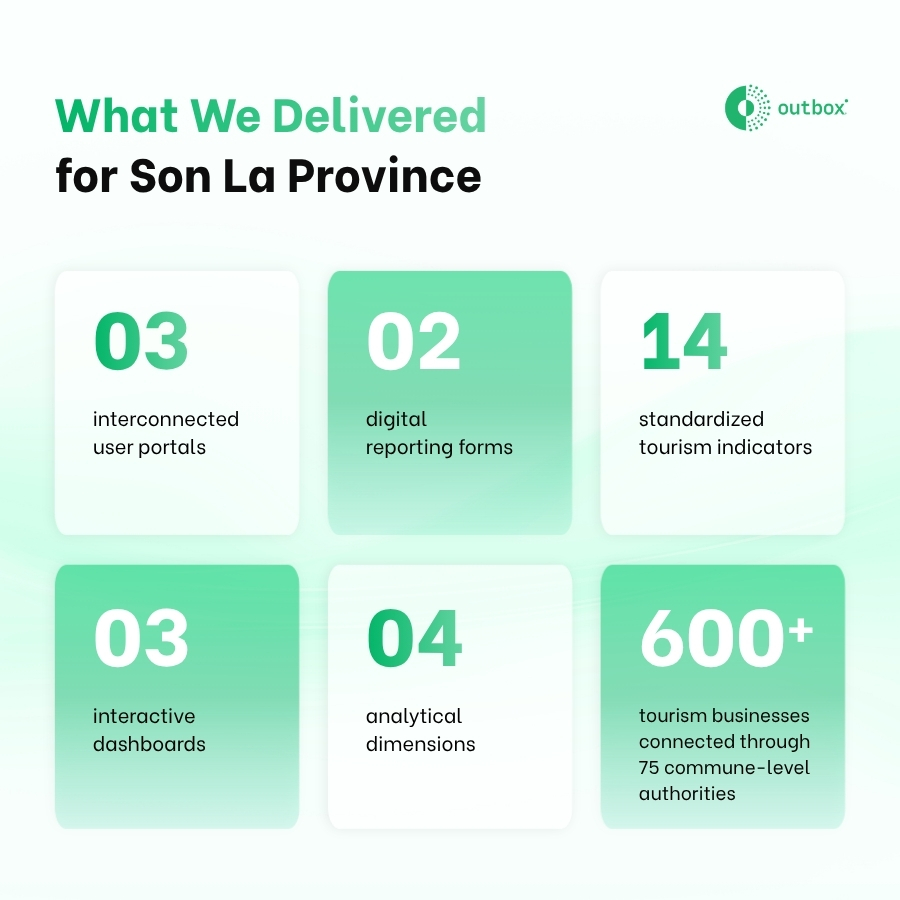
The successful completion of Phase 1 established the digital foundation for the Sơn La Tourism Intelligence System, delivering a standardized platform for tourism reporting and data management across multiple stakeholder groups. While the long-term impact will continue to be realized as the system is fully implemented across the province, the project has already delivered the core infrastructure required to support data-driven destination management.
Delivered:
- 03 interconnected digital portals tailored to the needs of provincial administrators, commune-level authorities, and tourism businesses.
- 02 standardized digital reporting forms, replacing fragmented manual reporting processes with a unified online workflow.
- 14 standardized tourism indicators presented through interactive dashboards with 4 analytical dimensions, allowing users to filter data by reporting period, geographic level, accommodation type, and individual accommodation establishment.
- 03 interactive dashboards, enabling stakeholders at different administrative levels to monitor tourism performance through intuitive visualizations.
- A centralized user, organization, and role management system supporting secure, role-based access across the reporting ecosystem.
- A scalable system architecture designed to support future integration of additional tourism datasets and intelligence capabilities.
Expected Impact
As the system is rolled out province-wide, it is expected to:
- Connect 75 commune-level authorities and more than 600+ tourism businesses through a single reporting platform.
- Standardize tourism reporting across multiple administrative levels, improving the consistency and accessibility of tourism statistics.
- Provide tourism authorities with more timely access to tourism statistics and destination performance insights.
- Enable tourism businesses to monitor their own operational performance through integrated dashboards, encouraging greater engagement with the reporting process.